
I’ve watched Spain and France meet enough times in the last two years that I genuinely expected this semifinal to be close. It wasn’t. Spain beat France 2-0 in Dallas, and by the time it ended, it felt less like an upset and more like a pattern finally being confirmed on the biggest stage possible.
How Spain actually won it
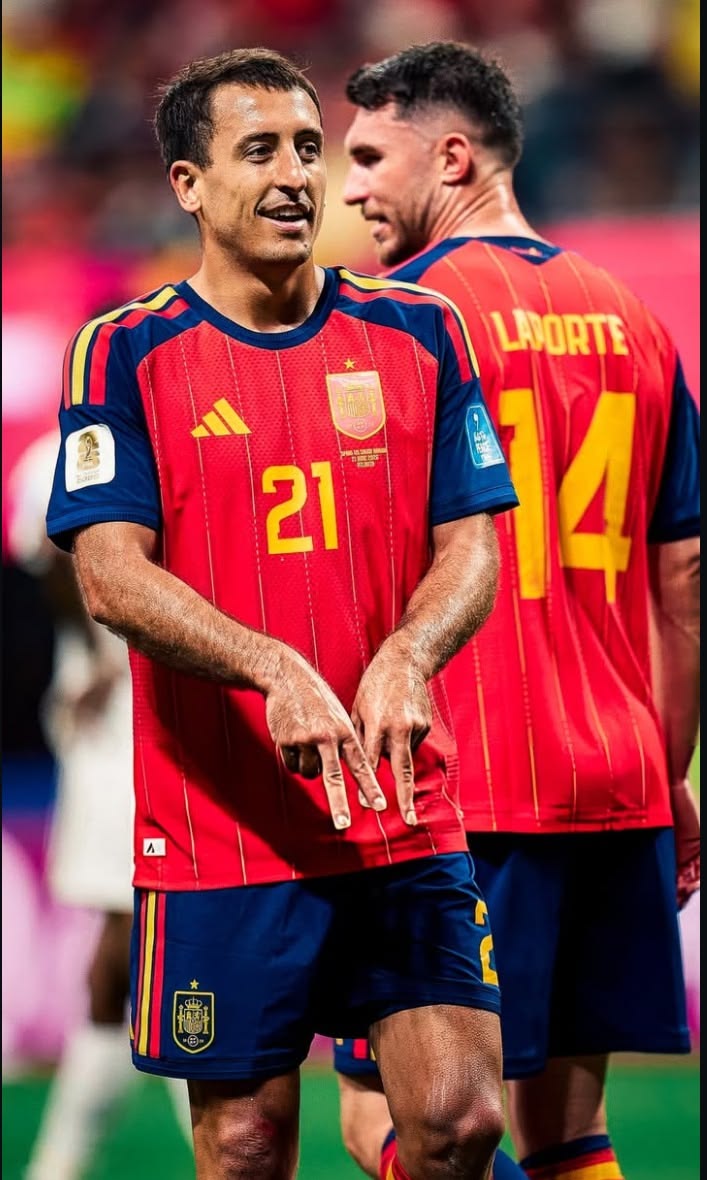
The breakthrough came from the penalty spot in the 22nd minute. Lucas Digne, trying to clear the ball under pressure, caught Lamine Yamal instead — a clumsy, avoidable foul that gifted Spain the chance. Mikel Oyarzabal stepped up and buried it low, his fifth goal of the tournament, giving France’s keeper no chance.
Spain didn’t sit on that lead. In the 58th minute, Pedro Porro doubled it — a clean one-two with Dani Olmo to slip in behind France’s defense and finish confidently. Three minutes later, Yamal thought he’d made it three, curling a beautiful finish past the keeper after rounding Digne — but he’d started his run early, and the offside flag wiped it out.
France’s best chance of the match came from a defensive mistake at the other end, when Spain’s keeper mistimed a header rushing off his line — but he recovered in time to block the follow-up shot, and that was as close as France came to getting back into it.
The first half told the real story
What’s easy to miss looking only at the scoreline is how one-sided the territorial battle was even before the penalty. France struggled to string together meaningful possession in Spain’s half, with their best first-half chance amounting to a hurried shot fired well over the bar. Spain, by contrast, kept finding pockets of space through the middle third, forcing France’s back line into repeated last-ditch recoveries — including one moment where a defender had to strip the ball off a Spanish forward’s toe just outside the box to prevent an even earlier opener. The penalty, when it came, wasn’t a fluke moment in an even contest; it was the release valve for pressure that had already been building for twenty minutes.
Why this result wasn’t really a surprise
Here’s what stood out to me digging into the head-to-head record: this wasn’t Spain’s first recent win over France. It was their third straight — following a 2-1 win at Euro 2024 and a wild 5-4 victory in the Nations League — and every one of those three wins came at the semifinal stage of a major tournament. Spain has now lost just two of their last eleven meetings with France in all competitions.
Mbappé, playing his record-setting 21st World Cup appearance for France, simply never got going. In the first half alone, he was caught offside more times than he touched the ball inside the box — a genuinely rare stat line for a player of his caliber in a match this important. It’s worth noting this wasn’t for lack of trying; Mbappé did find one clean sight of goal in the second half, drilling a low shot across the face of goal, only for a last-ditch Spanish defender to get a boot to it and divert it just wide of the far post.
The individual numbers behind Spain’s run
Oyarzabal’s goal wasn’t a one-off — it extended a run that’s been building all tournament. Only three players in Spain’s history have scored more goals at major tournaments than his current tally of seven, and no Spanish player has ever scored five goals in a single World Cup before this one. Since the start of 2025, he’s been directly involved in 24 goals across 19 appearances for the national team — 14 more than any other Spanish player in that span. That kind of sustained output, rather than a single standout tournament, is what separates a good run of form from what Oyarzabal has actually built over an eighteen-month stretch.
Olmo’s assist on the second goal wasn’t a fluke either. It tied him with Cesc Fàbregas for the most assists any Spanish player has recorded at major tournaments since 1980 — a record spanning more than four decades of Spanish football and some of the most gifted midfielders the country has ever produced.
What it meant for France
For France manager Didier Deschamps, this was his 26th World Cup match in charge — the most of any manager in tournament history — and it ended the way a lot of France’s recent tournament football has: created little, converted less. They managed just 10 shots the entire match, worth a combined 0.3 expected goals, with only three actually on target. It also extended an uncomfortable statistical trend: France has now never won a match at a World Cup finals after trailing at halftime, going 1-12 in that exact situation across their history. For a nation with France’s recent pedigree — a World Cup title and a runner-up finish in the two tournaments before this one — that record is a genuine tactical vulnerability, not just an unlucky footnote.
What it meant for Spain
This sent Spain to just their second World Cup final ever, and their first since they actually won the tournament back in 2010. For a country with as much club-level footballing pedigree as Spain, that’s a surprisingly short list of finals — which made reaching this one, and doing it by beating their toughest recent rival specifically, feel like more than just another step in the bracket.
It also validated a broader shift in how Spain has approached recent tournaments — leaning on a generation of academy-produced attacking talent like Yamal alongside proven experienced heads like Oyarzabal, rather than depending on any single star to carry the team. This semifinal was a clean demonstration of that balance: a teenager nearly adding a third goal, and a 27-year-old veteran scoring the opener that set the tone.
They’d go on to face Argentina for the trophy — a final that would turn out to be just as tight as this semifinal, decided 1-0 in extra time, closing out a tournament run that started with question marks about whether this Spain squad could handle knockout football and ended with them one win away from their second-ever title.
Sources referenced: match reporting and statistics from the 2026 FIFA World Cup semifinal between France and Spain, played in Dallas.