
.
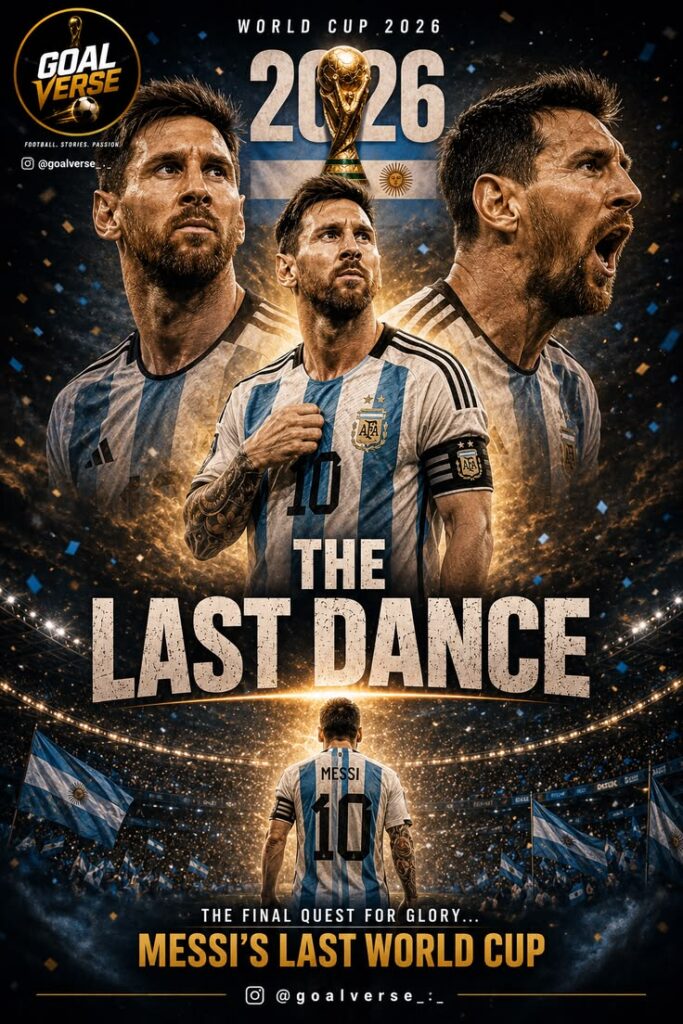
I’ve watched Messi play in four World Cups now, and the semifinal against England was the clearest example yet of something that’s become a running theme of his final tournament: Argentina doesn’t just rely on him to score. They rely on him to conjure moments that don’t exist until he creates them. Here’s what that semifinal actually looked like, and what it set up.
The moment itself
Argentina trailed England 1-0 heading into the final half hour, chasing their first-ever competitive meeting with England since 2002 and staring down elimination. Messi, at 39, spent the next 35 minutes doing what he’s done for two decades — pulling defenders out of position, finding gaps that shouldn’t exist, and setting up teammates rather than forcing the moment himself.
Enzo Fernández’s 85th-minute equalizer came from a Messi assist. So did Lautaro Martínez’s stoppage-time winner — a cross that, by most accounts, should have been an impossible pass at that angle with two defenders watching him. It wasn’t. Messi found Martínez anyway, and Argentina walked away 2-1 winners, into their second consecutive World Cup final.
The pattern behind the moment
What struck me watching it live is how familiar the shape of that comeback felt. Argentina had already come back from two goals down earlier in the tournament to beat Egypt in the last 16 — also with Messi as the central figure in the turnaround. By the semifinal, this wasn’t a one-off heroic moment so much as a pattern the whole team had learned to trust: stay in the game long enough, and Messi will eventually find the seam that decides it. Manager Lionel Scaloni said as much afterward, praising the group for never stopping surprising him — a comment that reads less like a compliment and more like an acknowledgment that this team had built its entire tournament identity around trusting that late-game capacity to turn a losing position around.
What made this tournament different for him
Going into that semifinal, Messi had already put together the best individual World Cup of his career by raw numbers — eight goals and four assists, both career highs for him in a single tournament, including an opening-game hat-trick against Algeria. At 39, in his sixth and almost certainly final World Cup, he was still the single biggest reason Argentina had made it back-to-back finals.
That put him in genuine contention for something that had eluded him even in his triumphant 2022 campaign: the Golden Boot, the award for the tournament’s top scorer, to go alongside the World Cup trophy he’d already won. He’d finished as runner-up for it multiple times across his career, including in 2022 when Mbappé’s final hat-trick pipped him despite Messi lifting the trophy itself. Winning both the Golden Boot and the World Cup in the same tournament is a genuinely rare double — only a handful of players in the tournament’s history have managed it — and heading into the final, Messi had a real, mathematically live path to finally closing that gap in his résumé.
The complication
The Golden Boot race got dramatically harder for Messi almost by accident. In the third-place match — a game with no bearing on the final itself — Kylian Mbappé scored twice in France’s wild 6-4 loss to England, pushing his tournament tally to 10 goals and overtaking Messi by two. That single match, played the day before the final, flipped the entire scoring race: Messi now needed a hat-trick against Spain just to tie Mbappé outright, and under FIFA’s tiebreaker rules, a tie would have gone to Messi anyway on assists — meaning a hat-trick wouldn’t just tie him, it would have won it outright.
It’s a strange quirk of tournament football — a “meaningless” bronze-medal match ended up deciding an individual award race in the biggest game of the tournament, before that game had even kicked off. Mbappé, for his part, wasn’t just padding a personal stat line in that third-place game; those two goals also moved him past Messi as the all-time leading scorer in World Cup history, a record that had briefly belonged to Messi earlier in the tournament.
How it actually ended
Here’s the part that makes this semifinal recap bittersweet in hindsight: Messi didn’t get his hat-trick. Argentina lost the final 1-0 in extra time to Spain, with Messi held scoreless against a Spanish defense that had conceded just once all tournament. Mbappé held on to win the Golden Boot with 10 goals to Messi’s eight, and also passed him as World Cup football’s all-time leading scorer, 22 goals to 21.
So the moment covered here — Messi single-handedly dragging Argentina past England — turned out to be his last great individual highlight of the tournament, not a preview of an even bigger final performance. He got Argentina to the final. He didn’t get the storybook ending to go with it.
The historical weight of a near-miss
It’s worth sitting with what this near-miss actually means for how Messi’s career gets remembered. He already has the trophy that mattered most — the 2022 World Cup itself — so this wasn’t a career-defining gap in the way the trophy once was. But the Golden Boot double specifically was one of the last individual boxes left unchecked, and coming this close, needing a single three-goal masterclass against the tournament’s stingiest defense, is the kind of near-miss that tends to get discussed for years rather than forgotten. Football history is full of “what if he’d scored one more” storylines, and this one now belongs on that list permanently.
Why the semifinal still mattered on its own terms
I think it’s worth separating those two things clearly, because it’s tempting to let the final’s result overwrite everything that came before it. The pass to Martínez, at 39, against a defense that had nearly held out for a first England final appearance in 60 years, doesn’t become less remarkable because the final went differently four days later. If anything, it’s the clearest single piece of evidence for why Messi was even in position to chase a Golden Boot at all — he was still doing things at 39 that most players can’t do at 25.
Argentina’s run ultimately ended one win short. But the version of Messi who got them there — pulling off a match-defining assist with the tournament’s biggest individual prize still mathematically alive — is the version worth remembering from this semifinal, regardless of how the final itself played out four days later.
Sources referenced: Sports Illustrated, Bleacher Report, ESPN, and Yahoo Sports coverage of the 2026 FIFA World Cup Golden Boot race and semifinal.