
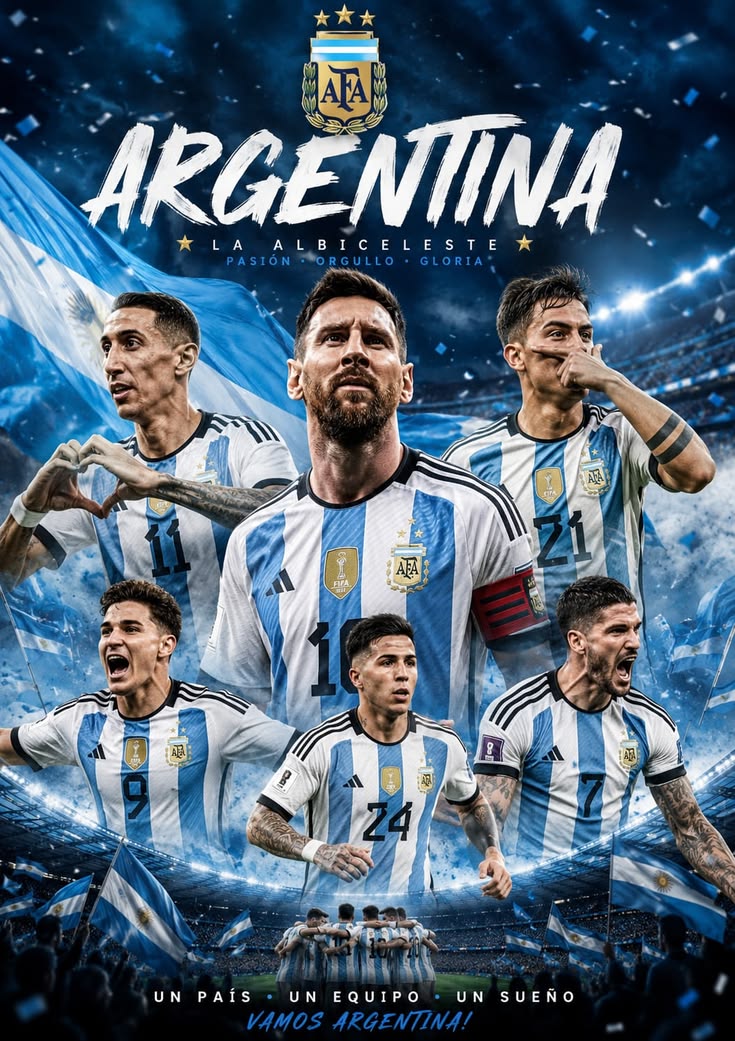
I watched this semifinal live, and I can tell you the football alone would have made it one of the tournament’s best games. What actually made it the most talked-about match of the World Cup happened after the final whistle, not during it. Here’s the full picture — the match itself, and the controversy that followed it.
The match: a genuine comeback
Argentina beat England 2-1 in Atlanta, but the scoreline undersells how close England came to reaching their first World Cup final in 60 years. England took the lead in the 55th minute through Anthony Gordon, and for half an hour it looked like it might hold. Argentina, defending champions and chasing back-to-back titles, refused to fold.
Enzo Fernández equalized from outside the box in the 85th minute off a Messi assist. Then, deep into stoppage time, substitute Lautaro Martínez rose to head home a cross — again set up by Messi — to complete the comeback. It was Argentina’s second straight World Cup Final appearance, keeping alive their bid to become the first team since Brazil in 1962 to win consecutive titles.
Messi, at 39 and playing in what’s almost certainly his final World Cup, was named man of the match. It was his first-ever meeting with England in a competitive fixture, and afterward he described it as “quite a special one, especially playing against England with all the historical context” — a comment that, in hindsight, undersold what was about to happen next.
The tactical picture behind the comeback
What made the comeback possible wasn’t just individual brilliance — Argentina’s approach through the middle third of the match had already shown signs of pressure building. England’s back line held firm for the better part of an hour, but Argentina kept probing the same channels, forcing repeated defensive resets that gradually wore down England’s structure. By the time Fernández struck from outside the box, it wasn’t a bolt from nowhere; it was the product of sustained pressure finally cracking a defense that had absorbed wave after wave. Martínez’s stoppage-time header followed the same pattern — Messi again finding space that had been created by nearly ninety minutes of accumulated pressure rather than a single moment of individual improvisation.
What happened after the final whistle
As Argentina’s players celebrated on the pitch, several of them — including Lisandro Martínez and substitute Giovani Lo Celso — unfurled a banner reading “Las Malvinas son Argentinas,” Spanish for “The Falklands are Argentine.” The banner was reportedly smuggled into the stadium by a fan who’d hidden it in his clothing and passed it to the players during the celebration.
That message refers to a decades-long sovereignty dispute between Argentina and the United Kingdom over the Falkland Islands, a British Overseas Territory that Argentina calls “Las Malvinas.” The dispute escalated into an actual war in 1982, a 74-day conflict that killed 649 Argentine and 255 British service members, along with three island residents.
The banner display wasn’t spontaneous or new — Argentina’s team has displayed similar banners before previous tournaments, including one before the 2014 World Cup that led FIFA to fine the Argentine federation. But given the stage — a World Cup semifinal against England specifically — this instance drew far more attention than past ones.
The reaction, from both governments
This is where the story moved well beyond football. UK Prime Minister Keir Starmer publicly backed calls for a FIFA investigation. The UK government issued a formal statement: “The World Cup might not be ours, but the Falkland Islands definitely are.”
On the Argentine side, President Javier Milei defended the players, calling the celebration “perfectly valid” and saying it “reflects a sentiment shared by all Argentinians” — while acknowledging he expected FIFA to issue a fine. Argentina’s Vice President had already raised tensions before kickoff, referring to England as “usurping pirates” in pre-match comments. Argentina’s foreign minister confirmed the country had filed a formal diplomatic protest of its own following the match.
FIFA opened a disciplinary investigation into the banner display, citing a breach of its code of conduct regarding political and provocative displays at matches — the same category of rule that led to a fine after Argentina’s similar banner ahead of a previous World Cup.
The banner itself became its own story
Beyond the diplomatic fallout, the physical banner became a minor story of its own. Reports emerged that the Argentine supporter who made and smuggled in the banner had been refused a request to have it returned to him after the match — the item apparently retained amid FIFA’s ongoing investigation. That detail is a small but telling sign of how seriously the incident was being treated behind the scenes, well beyond what a typical post-match celebration prop would ever warrant.
Why this wasn’t really “new” tension
It’s worth understanding this rivalry didn’t start with one banner. England and Argentina’s footballing history carries baggage well beyond this match — a notoriously ill-tempered 1966 quarterfinal that led an England manager to call Argentina’s players “animals,” a David Beckham red card in a bitter 1998 meeting, and continued friction in their 2002 World Cup clash. One academic interviewed by The Athletic described the two nations’ footballing relationship as a “strange, quasi-Oedipal” dynamic that adds new layers of resentment every time the teams meet. This was their first competitive meeting since 2002 — over two decades of accumulated history behind one 90-minute match.
The pattern has repeated before, too. Argentina displayed a similar Falklands banner before a 2014 World Cup warm-up friendly against Slovenia, five days before that tournament began — an instance that resulted in a formal FIFA fine of 30,000 Swiss francs against the Argentine federation for breaching rules on political statements at matches. That precedent is part of why this year’s investigation was widely expected to follow a similar path rather than break new disciplinary ground.
How this compares to other politically charged sporting moments
Sport and geopolitics colliding isn’t unique to this rivalry, but few examples carry quite this combination of a fresh military conflict’s human cost and an active, ongoing territorial dispute between two nations still negotiating their relationship today. It sits closer to moments like Cold War-era Olympic boycotts or divided-nation football fixtures than to the more common variety of sports controversy — bad officiating, doping scandals, transfer disputes — that dominate most tournament news cycles. The difference is that those other controversies resolve within the world of sport. This one doesn’t, because the underlying dispute exists entirely independent of football and will keep existing long after this World Cup is a memory.
Where things stand
I’m not going to weigh in on who’s “right” about the Falklands sovereignty question — that’s a genuine, decades-old political and legal dispute between two governments, not something a football semifinal settles, and it’s well outside what a sports recap should be adjudicating. What is worth understanding is how directly the two are connected in this rivalry specifically: the match result reopened a political wound that both governments were already primed to react to, and neither side treated it as “just sport” once it happened.
If FIFA’s investigation results in a fine, it likely follows the same pattern as the 2014 case — a financial penalty rather than any competitive consequence. But the diplomatic fallout, unlike a fine, doesn’t resolve when the investigation closes. Statements from a sitting UK Prime Minister and an Argentine President don’t get walked back the way a football fine gets paid and forgotten — they become part of the historical record of an already decades-long dispute, adding one more chapter to a story that started well before either team’s current squad was born.
Sources referenced: Al Jazeera, Yahoo Sports, and BBC Sport coverage of the 2026 FIFA World Cup semifinal and its aftermath.