
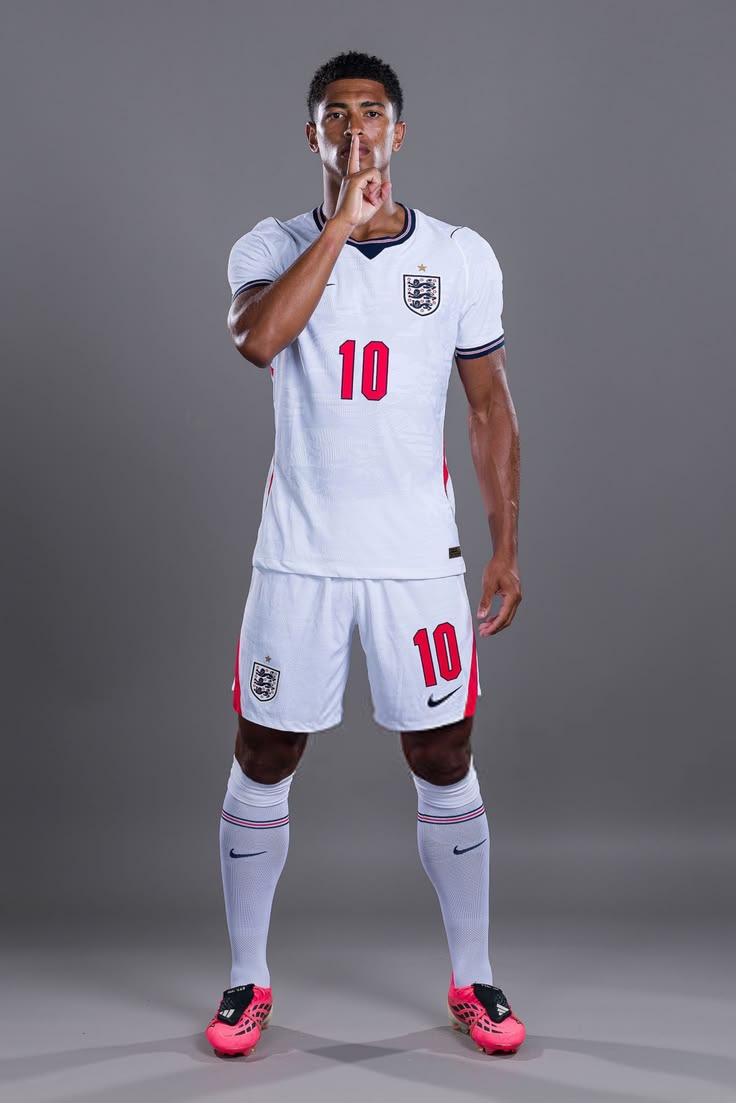
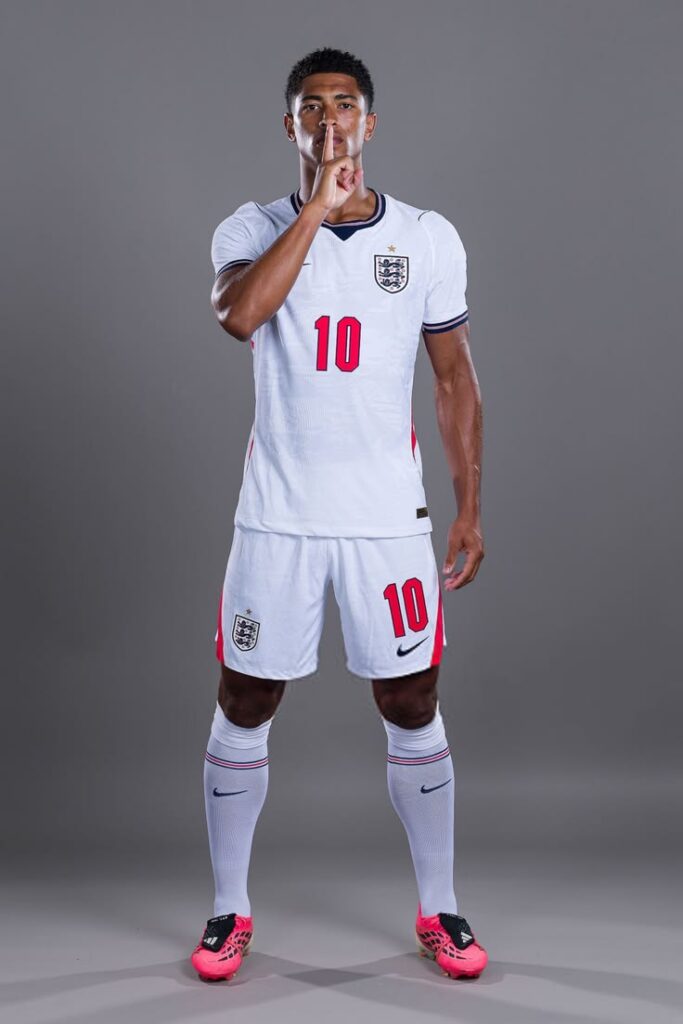
.I’d been half-expecting Bellingham to have a difficult tournament, honestly. The build-up to this World Cup wasn’t smooth for him, and if you’d told me in the spring how it would actually end, I’m not sure I’d have believed you. Here’s the full arc — the doubt, the record he broke, and why it mattered so much for England specifically.
The rocky build-up nobody talks about now
It’s easy to forget, watching how this tournament actually went for him, that Bellingham’s place in England’s team wasn’t guaranteed even a few months out. He missed England’s September qualifiers recovering from shoulder surgery, wasn’t called up again in October, and looked visibly frustrated when he did return to the squad in November. His relationship with manager Thomas Tuchel had genuine public strain — Tuchel had to publicly apologize after describing Bellingham’s on-field behavior as “repulsive” earlier in the year, later clarifying he’d used the word unintentionally since English isn’t his first language.
That tension fed a real, publicly debated question heading into the tournament: whether Bellingham should even start as England’s No. 10, with pundits and former players like Phil Jones openly calling for Aston Villa’s Morgan Rogers to take the role instead, given Rogers’ outstanding club form that season — seven goals and three assists in seventeen Premier League outings, form good enough that Tuchel had named him in four of his previous five starting lineups heading into the tournament. This wasn’t just outside noise — it was a genuine, unresolved selection question right up until the tournament began, with real statistical evidence on both sides of the debate.
How the debate actually got settled
It didn’t take long. Bellingham’s performance against Croatia in England’s opening group match effectively ended the position debate — Sky Sports covered it under the headline framing that his performance had shut down the “No. 10 discussion” outright. He started that match in the number 10 role, with Declan Rice and Elliot Anderson playing behind him and Harry Kane leading the line, and the setup made clear England weren’t just giving a talented young player minutes anymore — they were building the team’s attacking identity around his timing and final-third influence.
That match also carried its own piece of history: Bellingham became the youngest European player to feature at four different major tournaments spanning both the World Cup and European Championship, at 22 years and 353 days old — a résumé most elite players take a full decade to assemble, built by a player who made his professional debut for Birmingham City at just 16 years and 38 days old. His tournament journey had actually started at Euro 2020 (played in 2021) when he was only 17, followed by the 2022 World Cup in Qatar and a central role at Euro 2024 — this was already his fourth major tournament before he turned 23.
The goals started piling up
From there, the tournament became a genuine goalscoring showcase. Bellingham scored against Croatia in the group stage, then again versus Panama. He followed that with braces against both Mexico in the round of 16 and Norway in the quarterfinals — form good enough that former England defender Gary Neville said watching him gave him “goosebumps,” calling his performances “game-changing” and crediting him with carrying England into the semifinals “almost single-handedly with the support of Harry Kane.” Notably, the exact dynamic that had fueled pre-tournament doubt — his sometimes-tense relationship with Tuchel — resurfaced even during this hot streak, with visible on-field exchanges between the two after the Norway win that Neville publicly said he had “no problem” with, framing the tension as a healthy competitive relationship rather than a genuine rift.
By the semifinal stage, Bellingham had become the tournament’s top-scoring midfielder with six goals — a genuinely rare feat, since no midfielder in World Cup history had ever scored more at a single tournament than that. Only three players in the entire competition — Messi, Mbappé, and Haaland, all recognized forwards — had scored more than him at that point.
The record
Bellingham added his seventh goal of the tournament in England’s third-place playoff — a wild 6-4 win over France — with a stoppage-time solo effort. That seventh goal made him the outright highest-scoring England player at any single World Cup or European Championship in the nation’s history, surpassing every previous mark, including Alan Shearer’s five goals at Euro 1996 and Harry Kane’s six-goal tallies at both World Cup 2018 and this same 2026 tournament.
To put that record in context: Bellingham’s seven goals put him ahead of a list that includes some of English football’s most iconic names across nearly seventy years of major tournaments — Gary Lineker, Bobby Charlton, Geoff Hurst, Wayne Rooney, and Bukayo Saka all sit below him on that all-time single-tournament list. Fittingly, it was Saka who stole the headline of that specific match with a hat-trick of his own in the same 6-4 win, meaning England’s record-breaking third-place finish featured two individual milestone performances in the same 90 minutes.
Why this particular record matters so much
What makes this record land differently than a typical goalscoring milestone is who it displaced and how. England has produced elite forwards across generations — Lineker, Shearer, Rooney, Kane — and none of them managed seven goals in one tournament. Bellingham did it as a midfielder, not even the team’s designated striker, playing in a role built around distribution and link-up play as much as pure goal-scoring.
It also arrived at the end of a genuinely uncertain year for him personally — recovering from surgery, missing camps, a strained relationship with his own manager, and a live public debate about whether he should even start. Reading his tournament arc from that starting point to England’s record books makes the ending land as more than just a good stat line; it’s a genuine turnaround story with real stakes attached to it at nearly every stage.
What comes next
At 23, with an already-historic World Cup on his résumé and years of peak career still ahead of him, this tournament is likely to be looked back on as the moment Bellingham stopped being discussed as a promising young talent and started being discussed in the same breath as England’s greatest-ever tournament performers. The selection debate that dominated headlines before the World Cup began already feels like a footnote against what actually happened once it kicked off — a reminder that even the players who end up rewriting a nation’s record books don’t always arrive at a tournament with their spot already secured.
Sources referenced: FIFA.com, Sky Sports, Yahoo Sports, England Football, and Sports Illustrated coverage of Jude Bellingham’s 2026 FIFA World Cup campaign.