
I’ve picked a “team to root for” at every World Cup since I was a teenager, and it’s always been an easy call — whoever plays the more exciting football, or whichever team has the player I like watching most. This year’s final between Spain and Argentina was the first time that simple approach completely fell apart on me.
By kickoff, I wasn’t just watching two football teams. I was watching two heads of state, two foreign policy positions, and a fight that had almost nothing to do with the sport itself. Here’s what I found trying to sort out why, and how I ended up deciding.
It started as a football rivalry, and mostly stayed one on the pitch
[Image: split image of Spain and Argentina flags with the World Cup trophy between them]
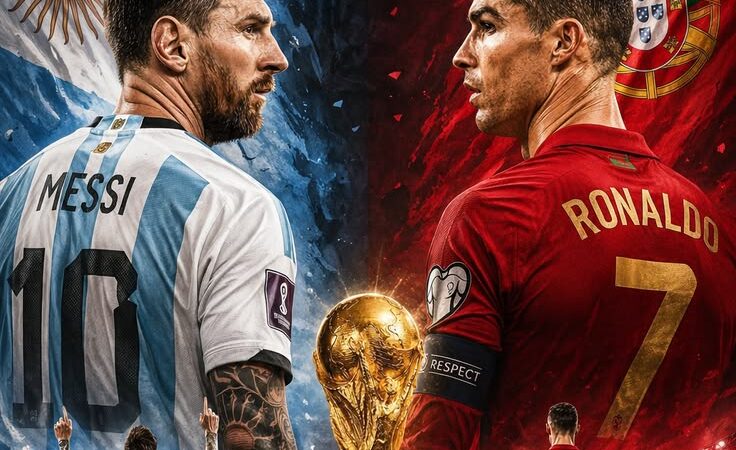
On the pitch, this was a genuinely great matchup of contrasting styles. Argentina, led by a 39-year-old Lionel Messi in what was likely his final World Cup, built everything around protecting and freeing up their best player. Spain played a more collective game — quick passing, tight defense, speed across all eleven players rather than one central star. Spain won it 1-0.
If the story had stopped there, this would be a normal “who do you root for” piece: pick based on playing style, or loyalty to a favorite player, and move on.
Where it stopped being just football
[Image: photo of Spanish PM Pedro Sánchez and Argentine President Javier Milei side by side]
It didn’t stop there, because the presidents of both countries have spent roughly two years in an open, personal political feud, and a lot of that spilled directly into how people watched this final.
Argentina’s president skipped the final in person, citing superstition, while framing his support for Israel as a defining part of his foreign policy — going as far as pledging to move Argentina’s embassy to Jerusalem. Spain’s prime minister attended in person and has taken the opposite position, publicly condemning Israel’s actions in Gaza and pulling Spanish port access for ships carrying weapons bound for Israel.
That contrast turned into real, visible symbolism during the tournament. On social media, plenty of people started framing Argentina as “Israel’s team” and Spain as standing with Palestine — not because either federation made an official statement to that effect, but because of how closely the two heads of state had tied themselves to the teams’ successes. Israel’s prime minister publicly told Argentina’s president “we support you, we support Argentina” hours before kickoff.
I want to be clear about something I noticed reading through commentary from Argentine fans themselves: plenty of them pushed back hard on being lumped in with their president’s foreign policy. One supporter, after Argentina’s semifinal win, said bluntly that no “real” Argentinian supports what their president does on that front, and accused him of being financially influenced. A national team’s players and fans aren’t the same thing as their head of state — that distinction got lost in a lot of the noise I read.
The bigger political stage around it
[Image: photo of the VIP section at MetLife Stadium showing dignitaries at the final]
The final itself became a genuine diplomatic moment. Spain’s PM and the U.S. president were seated together in the VIP section — their first face-to-face contact after roughly two years of tension over defense spending — while the U.S. president had separately called Argentina’s president a “friend” before the match. Spanish royals were also in attendance. It was, by any measure, more of a geopolitical stage than a sports final usually is.
That’s the piece that made this genuinely different from past World Cups I’ve watched. It wasn’t fans reading politics into a football match after the fact — heads of state, foreign ministries, and international commentators were actively treating the result as a political outcome before a ball was even kicked.
How I actually decided who to root for
I’m not going to tell you which side of the Israel-Gaza debate, or Milei’s politics versus Sánchez’s, is the “correct” one to be on — that’s a real, contested, high-stakes political disagreement that’s much bigger than a football match, and I don’t think a sports blog is the place for me to hand down a verdict on it.
What I will say is what I actually did: I separated the football from the politics, on purpose, because conflating “who plays better” with “whose president I agree with” felt like it was doing a disservice to both. I ended up rooting for the football — the team-oriented, collective style — and made a conscious choice not to let either country’s foreign policy decide it for me.
If you want a genuinely simple answer to “who should I root for,” here it is: there isn’t one that works for everyone this time. If you care about the football, pick a side based on playing style. If you care about the politics, that’s a legitimate reason too, and you’re not wrong to weigh it. Just know going in, more than any final I’ve watched, that you’re not picking a neutral answer either way — this one came with the politics already built in.
Sources referenced: The Nation, Democracy Now, Middle East Eye, Euronews, and Fox Sports coverage of the 2026 FIFA World Cup final and the surrounding political context between Spain and Argentina.