
I went back and read every buildup piece I could find for the Spain-Argentina final, and the phrase that kept showing up, from multiple outlets independently, was some version of “the perfect final.” I wanted to understand why people kept saying that before I just repeated it — so here’s what actually made this matchup special before a ball was even kicked.
Two contrasting styles reaching the same stage
This wasn’t just a final between two good teams. It was a genuine clash of footballing philosophy. Argentina came in as the reigning champions who built their run on resilience — grinding out results, leaning on experience, and embracing difficulty rather than avoiding it. Spain arrived as the European champions who’d spent the tournament doing the opposite: control, patient buildup play, dominating possession rather than surviving it.
That contrast is what made this final genuinely interesting beyond the star power involved. It wasn’t just “which team is better” — it was “which approach wins when both are executed at the highest level.” Football finals rarely offer such a clean philosophical test case. Usually one team is simply stronger across the board. Here, both sides had legitimate, fully-realized identities that had each proven capable of winning a World Cup.
The generational handoff nobody wanted to say out loud
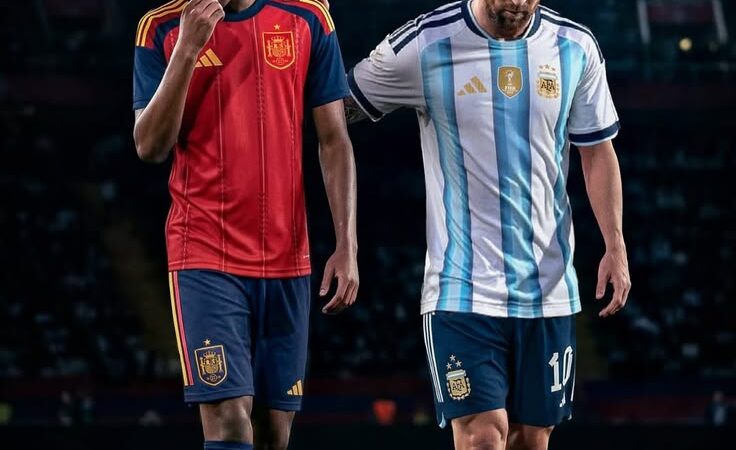
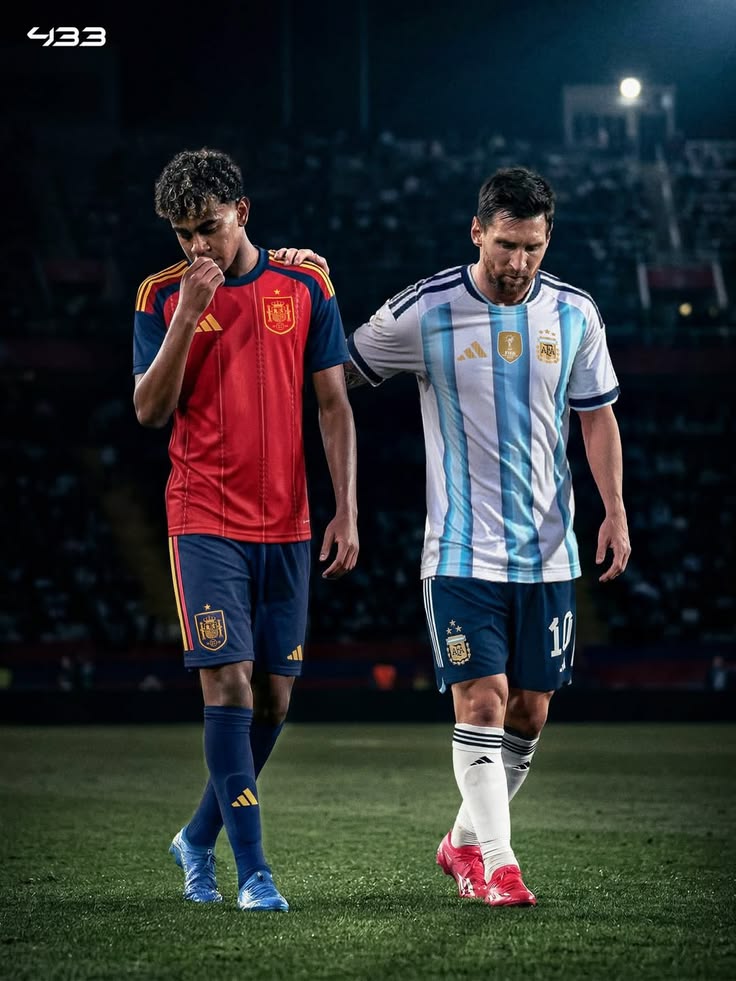
The most talked-about storyline heading in was Lionel Messi against Lamine Yamal, facing each other on the international stage for the first time. Messi, 39 and in his final World Cup, against Yamal, Spain’s teenage sensation and the face of the sport’s next generation. Neither side needed to say it explicitly — everyone covering the tournament understood this final was also, unavoidably, about the guard changing.
Adding to the historical weight: this was the first time a World Cup final had been contested between the reigning European champions and the reigning South American champions simultaneously holding those titles — a genuine rarity in tournament history. Most finals feature at least one team that’s either an underdog or a repeat contender without a current continental title attached. Having both finalists arrive as sitting continental champions raised the stakes on both sides in a way that doesn’t happen often.
Team news heading into the match
Argentina made three changes to their starting lineup from the semifinal win over England, with Rodrigo De Paul, Nico González, and Gonzalo Montiel restored to the XI. Notably, eight of Argentina’s eleven final starters had also started the 2022 final — this was a team leaning heavily on proven tournament experience rather than fresh legs. Manager Lionel Scaloni had made clear throughout the tournament that continuity mattered more to him than squad rotation, and the final lineup reflected that philosophy right to the end.
Spain, by contrast, made zero changes from their semifinal win over France, repeating the exact XI that had gotten them there. Fabián Ruiz kept his place in midfield ahead of Barcelona’s Pedri — a selection call that had been debated throughout the tournament, with plenty of pundits arguing Pedri’s creativity was being underused in favor of Ruiz’s defensive discipline.
Worth remembering for context: Spain were playing in just their second World Cup final in the nation’s history, and their first since actually winning the tournament back in 2010. For a footballing nation with Spain’s club-level pedigree — a country whose clubs have dominated European competition for over a decade — that’s a surprisingly thin international trophy history, which added its own layer to why this final mattered so much domestically.
The semifinal that reset expectations
One detail that shaped how people watched the final: England’s semifinal exit was genuinely one-sided. England raced to a 4-0 halftime lead over France, with Bukayo Saka scoring a hat-trick before the match finished 5-4. That result reshuffled a lot of pre-final power rankings — France, many assumed, would be the team giving Argentina or Spain the toughest test, and instead they were eliminated in one of the tournament’s most lopsided knockout results.
That semifinal result is part of why the final carried extra weight — both finalists had already beaten the “other” pre-tournament favorites just to get there. It also meant the final wasn’t just Spain versus Argentina in isolation; it was implicitly being read as the answer to “who was actually the best team in this tournament,” since the two sides many expected to contend for the trophy had both been eliminated before the final even started.
Where things stood off the pitch
It’s also worth noting the final wasn’t happening in a political vacuum. Both national federations had spent the buildup managing separate off-field storylines — everything from squad selection debates to, in Spain’s case, ongoing scrutiny of individual players’ public lives. None of that affected the football directly, but it shaped a lot of the media coverage running alongside match previews, adding a layer of noise that both camps had to actively manage in the days before kickoff.
The venue and the moment
The final itself carried its own symbolism, being played on a stage built specifically for this tournament’s scale. Hosting a final between two teams with this much combined history — Argentina’s multiple titles, Spain’s single triumph 16 years earlier, both nations’ deep club football pedigree — meant the atmosphere going in was less about neutrality and more about which set of fans could make more noise from kickoff. Both traveling supporter bases were known throughout the tournament for their intensity, and pre-match coverage repeatedly noted how evenly split the surrounding city felt in the days leading up to the match.
Why the buildup mattered as much as the result
Reading back through all of this, I understand now why “the perfect final” framing stuck. You had two contrasting footballing identities, a literal handoff between football’s biggest current star and its likely next one, a genuine historical rarity in the matchup itself, and a semifinal shock that reset assumptions about who the best team in the tournament even was. That’s a lot of storylines converging on one match — most finals get one or two of those. This one had all of them at once.
What it means going forward
Finals like this tend to become reference points for years afterward — not just for the result, but for everything that made the buildup itself worth talking about. Whether Spain’s control-based approach or Argentina’s experience-driven resilience “wins” the broader philosophical argument in football is a conversation that will keep going long after this specific final is decided, the same way Spain’s tiki-taka era versus Argentina’s more direct approach has been debated for over a decade already.
For fans, that’s really the value of paying attention to a buildup like this one — not just knowing the score afterward, but understanding why the match carried the weight it did before kickoff. The next time two finalists meet with this much converging history, storylines, and generational stakes, it likely won’t be for a while — which is exactly why it was worth understanding properly the first time around, rather than just watching the score come in.